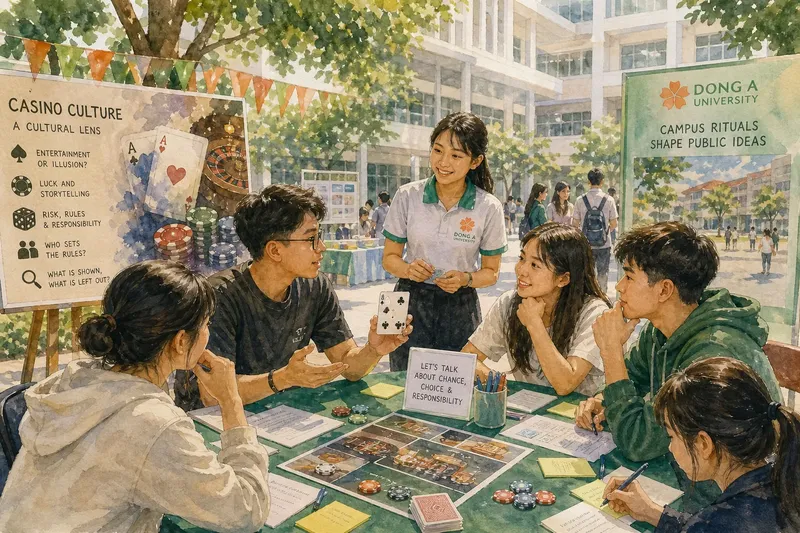
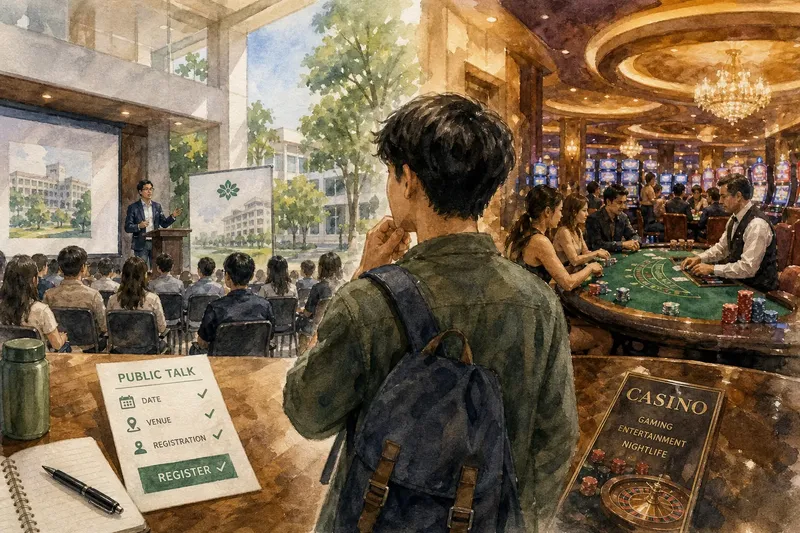
How Universities Can Teach Casino Culture Through Media
Explore casino culture at Đại học Đông Á through film, advertising and language, helping students analyse public ideas without sharing private experiences.
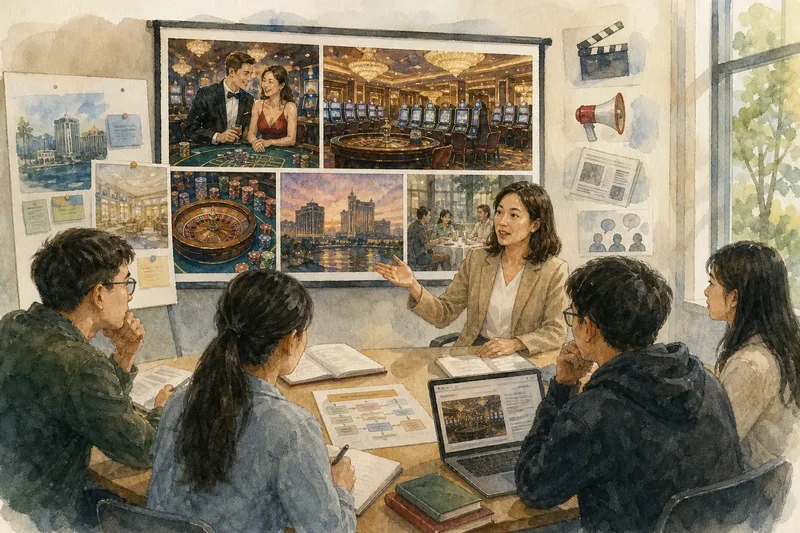
Casino imagery in a film advert or tourism campaign can reveal how a society talks about leisure, wealth and risk. A media-focused lesson at Đại học Đông Á gives students something visible to analyse without asking them to disclose personal experiences.
Universities have long been places where public ideas are examined, not simply repeated. On this subject, that means studying how casino culture is represented and what assumptions those representations invite, rather than promoting gambling or judging individual choices.
What can casino culture in media reveal?
Begin with a specific public artefact: a film scene, a tourism brochure, a news headline or an advertisement. Ask what it presents as exciting, glamorous, ordinary or troubling, and whose point of view is missing.
This approach separates evidence from interpretation. A student might point to bright lighting, a confident character or language about luck; the class can then consider what those choices suggest without treating them as proof of what audiences believe or do.
How can a university connect the topic to public ideas?
Universities can make room for disagreement by treating claims as objects of analysis. Students might compare how entertainment media frames casino settings with how public commentary discusses tourism, leisure or risk.
Keep the discussion anchored to the material. If someone makes a broad claim about a group, ask which words or images support it and whether another interpretation is plausible. This is closer to reading a text carefully than debating who has the right personal experience.
Which materials and questions make useful teaching prompts?
Choose material that is publicly available and suitable for the class. A short excerpt or a single image can be enough; provide context such as its source and intended audience where that information is available.
- Film scene: If the scene links casino settings with glamour, identify the visual or dialogue cues; if it does not, examine what mood or meaning it creates instead.
- Advertisement: If it associates casino imagery with status or excitement, discuss the specific wording and design; if that association is absent, ask what the advert emphasises.
- Tourism material: If it presents casino culture as part of a destination, identify which other features appear; if it does not, consider what the material chooses to promote.
- News headline: If the wording signals approval or concern, compare it with the accompanying text; if its stance is unclear, discuss what further context a reader would need.
- Public commentary: If it makes a claim about social effects, separate the claim from the supporting reasons; if reasons are not offered, mark the point as an assertion rather than a settled conclusion.
- Classroom notes: If a comment refers to an identifiable person’s private behaviour, leave it out of shared notes; if it concerns the public material, record the idea without attaching it to a student.
How should students analyse casino culture in media?
A simple sequence keeps the work focused: describe what is present, identify the choices shaping it, then consider possible interpretations. The sequence is like sorting objects on a table before discussing what they might mean; it prevents an early assumption from becoming the whole conversation.
Say a class has a fictional tourism advert showing a casino interior, a family dining scene and the phrase “an evening to remember”. Students first note those three elements, then identify the advert’s emphasis on entertainment and hospitality. They decide that the material supports discussion of how leisure is framed, but does not by itself establish what visitors think or do. The observable output is a short analysis tied to the advert, with its limits stated.
What questions do students commonly ask?
Can a class discuss gambling directly?
Yes, when it is relevant to the learning aim. Keep claims grounded in the material or clearly identified as questions, and do not ask students to report their own behaviour.
What if students interpret the same image differently?
Ask each person to point to the details behind their reading. Different interpretations can be recorded side by side when the material does not settle the question.
Does the lesson need a guest speaker?
No. A carefully chosen public artefact can support close analysis on its own. If a speaker is invited, make their role clear and distinguish their perspective from the class’s analysis.
How can students avoid making unsupported claims?
Separate what can be directly observed from what is inferred, and note when a claim needs more context. Where the topic raises an individual concern, direct the student privately to an appropriate university service or qualified professional rather than treating class discussion as support.
How can the learning continue beyond one class?
Students can keep a short record of the artefact, the details they noticed and the interpretations those details support. A later class can compare materials from different settings or genres, while keeping each conclusion proportionate to its source.
For a university lesson on casino culture, the useful outcome is not a single approved opinion. It is the ability to distinguish representation from evidence and to discuss public ideas with precision, without turning classmates into examples.