Why Campus Rituals Make Belonging Visible at Đại học Đông Á
Why campus rituals make belonging visible at Đại học Đông Á: see how recurring customs shape public ideas about chance, risk and shared responsibility.
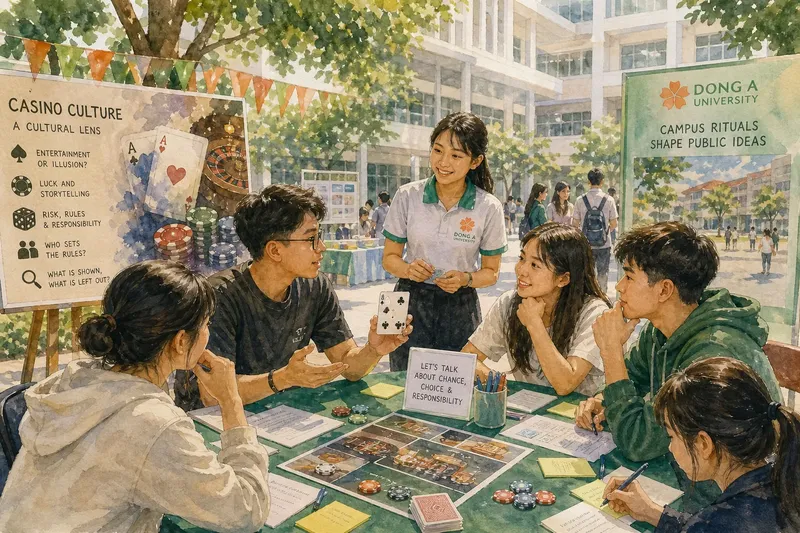
At Đại học Đông Á, a student greeting arrivals at a campus event can make a shared custom feel welcoming; a casino-themed activity can make it feel more complicated. Why campus rituals make belonging visible is also a question about public ideas: what do games of chance teach people about luck, choice and responsibility?
Universities are places where such ideas can be discussed rather than simply absorbed. Casino culture offers a revealing lens because its familiar symbols—cards, chips, tables and the promise of a lucky turn—can prompt conversations about entertainment, risk, money and who sets the rules. That does not mean a university should imitate gambling; it means campus events can help people examine the culture around it.
What can casino culture reveal about public ideas?
Casino culture packages chance as spectacle. A bright table, a dealer’s gestures and a sequence of wins or losses can make uncertain outcomes feel like a story with a hero, a strategy and a turning point. In public life, that story can blur the difference between a decision someone controls and an outcome shaped by chance.
A university discussion can make the distinction visible. Students might compare a game’s rules with the way its advertising presents it, asking what is emphasised, what is left out and how an audience is invited to feel. The subject then becomes less about glamour and more about how communities interpret risk and responsibility.
How can a university discuss casinos without promoting gambling?
Keep the activity focused on culture and critical thinking, not wagering. A film discussion, a display of historical objects, or a classroom exercise using paper tokens can examine casino imagery without real-money play or pressure to participate.
Organisers should describe the purpose plainly, make participation optional and offer an alternative for anyone who would rather not engage with gambling-related material. A brief note in the event description can explain that the session explores representation and public ideas, not gambling advice or a chance to win money.
What should organisers check before planning an event?
- Purpose: If the plan is to analyse representation or history, use discussion prompts and source material; if the plan depends on wagering or prizes tied to chance, replace it with a non-wagering activity.
- Materials: If real money, betting slips or casino-style prizes appear in the plan, remove them; if the session needs a game mechanic, use paper tokens with no monetary value.
- Language: If publicity promises winnings or presents gambling as an easy route to success, rewrite it to describe the cultural question; if the wording still sounds promotional, ask a colleague to review it.
- Participation: If attendees must disclose personal experiences or join a role-play, offer a listening or observation option; if no comfortable alternative is available, redesign that activity.
- Context: If a symbol or custom is included without explanation, add a short account of its meaning and limits; if organisers cannot explain its relevance, leave it out.
- Support: If discussion could raise concerns about gambling harm, identify an appropriate university support contact before the event; if no suitable contact is known, consult student services or a qualified professional.
These checks work like labels on a set of cards: they help people see what each element is for before the activity begins. They are not a substitute for university policy or professional advice where either is needed.
How can a campus event examine casino culture?
Imagine a student society at Đại học Đông Á plans an evening session for a small group, with a poster, a deck of cards, paper tokens and a short discussion. The society wants to explore how casino scenes depict luck, but its first draft also proposes a prize for whoever collects the most tokens.
The organisers remove the prize and state that tokens have no monetary value. They use the cards to prompt discussion about which outcomes players control and which depend on chance, then invite attendees to note one detail from the poster that makes gambling look appealing and one detail it leaves unsaid. At the end, they collect written responses without names and review whether the prompts led to discussion of both attraction and risk; if responses focus only on winning, they can revise the prompts before repeating the session.
The resulting event keeps the casino imagery available for analysis without turning it into an inducement to gamble. It also gives organisers a concrete way to decide what needs changing: look at the material, the language and the questions participants actually engage with.
What questions do students ask about casino culture on campus?
Can a university use casino imagery in a class?
It can be discussed as cultural material when the purpose is clear and the activity does not require wagering. A lecturer can explain the context, invite critical analysis and provide an alternative if the subject is uncomfortable for a student.
Are paper-token games the same as gambling?
Paper tokens without monetary value can illustrate rules and chance, but the framing still matters. Avoid prizes, pressure to compete or language that presents the exercise as a way to practise gambling.
How can organisers keep a discussion balanced?
Ask participants to consider both what casino imagery promises and what it omits, including the roles of chance, rules and personal choice. If the conversation becomes promotional or dismissive of potential harm, bring it back to the stated cultural question.
Where can students get help if the topic feels personal?
They can contact an appropriate university support service or speak with a qualified professional. Organisers should avoid trying to diagnose or counsel participants themselves and should share support information discreetly.
What should a campus tradition carry forward?
Why campus rituals make belonging visible at Đại học Đông Á depends partly on what they invite people to think about together. A thoughtful event can treat casino culture as a subject for public discussion, while making clear that examining gambling is not the same as endorsing it.
Afterwards, record which question opened up the discussion and which part of the event needed clearer framing. That simple note gives the next group a useful starting point: preserve the invitation to think critically, and revise anything that made chance look like certainty.